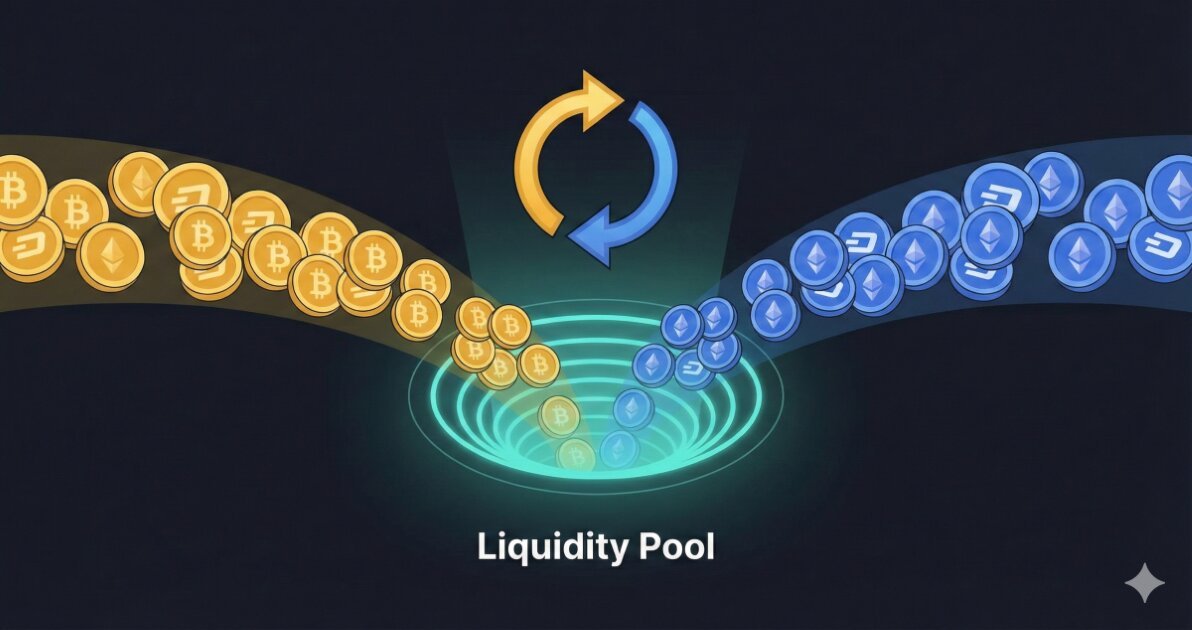
Building a crypto exchange exposes you to a matrix of technical, operational, and regulatory constraints that intersect in ways rarely seen in traditional financial infrastructure. The problem is not that any single challenge is unsolvable, but that solving one often tightens the constraints on three others. This article walks through the specific tensions, failure modes, and design trade-offs that define exchange architecture and operations.
Custody Architecture and Key Management
Every exchange begins with a custody decision: hot wallets for liquidity, cold storage for security, and warm wallets as a compromise. The core challenge is velocity. Users expect withdrawals to process within minutes, but moving funds from cold storage introduces latency measured in hours or days when multisig approvals and hardware security modules are involved.
The operational tension shows up in withdrawal thresholds. Set the hot wallet limit too high, and you concentrate risk. Set it too low, and you create friction that drives users to competitors. Most exchanges run hot wallets holding 2 to 5 percent of total assets under management, but the exact ratio depends on observed withdrawal patterns, which vary by asset, jurisdiction, and market volatility.
Key rotation adds another layer. If you rotate keys on a fixed schedule, you telegraph operational windows to attackers. If you rotate on demand, you introduce human decision points that become social engineering vectors. Hardware wallets and HSMs mitigate but do not eliminate this; someone still decides when to sign, and that decision path is the vulnerability.
Order Matching and Settlement Finality
Centralized exchanges promise instant execution, but settlement happens in layers. When a user buys Bitcoin with USDT, the exchange updates internal account balances immediately, but the actual movement of assets onchain occurs in batches. This creates a window where the exchange is extending credit to itself, and that window becomes a liability during network congestion or oracle failures.
Matching engine design forces a choice between throughput and fairness. A simple FIFO queue is transparent but slow. Batch auctions reduce frontrunning but introduce latency. Pro-rata matching at a single price point prevents certain manipulation strategies but requires careful handling of partial fills. Each approach changes the incentive structure for market makers and affects which strategies dominate your order book.
Settlement lag matters most during rapid price movements. If Bitcoin drops 10 percent in three minutes, users who sold at the top expect their funds available for withdrawal, but the exchange may still be processing onchain batches at the old price. The mismatch between perceived execution and onchain finality creates liquidity pressure that can cascade into forced deleveraging or withdrawal delays.
Regulatory Fragmentation and Compliance Infrastructure
Every jurisdiction defines “exchange” differently, and the definitions shift as regulators respond to enforcement actions and legislative updates. Operating globally means either restricting services by geography or maintaining separate legal entities with isolated liquidity pools. The second approach doubles compliance costs and fragments liquidity, but the first approach caps growth.
Know Your Customer and Anti Money Laundering requirements create database design challenges. You must store identity documents, transaction histories, and risk scores in ways that satisfy regulators in multiple jurisdictions while also allowing for the right to erasure under certain privacy laws. The conflict is not theoretical; European data protection rules and US surveillance requirements impose contradictory retention and access requirements.
Travel rule compliance for withdrawals above certain thresholds requires sharing sender and recipient identity information with counterparty exchanges. This works only if the recipient exchange supports the same protocol and operates in a cooperative jurisdiction. Unhosted wallets complicate this further; you cannot comply with a rule that requires recipient verification when the recipient is a private key with no attached identity.
Liquidity Bootstrapping and Market Maker Agreements
New exchanges face a cold start problem. Traders go where liquidity exists, and market makers provide liquidity only where traders exist. The typical solution is to offer rebates or zero fee structures to market makers in exchange for minimum quote obligations. These agreements specify maximum spread, minimum depth, and uptime requirements.
The risk is that you attract mercenary liquidity that disappears during volatility. A market maker contractually obligated to maintain a 10 basis point spread on the BTC/USDT pair may simply turn off their bot when a flash crash widens natural spreads to 200 basis points. Your agreement includes penalties, but enforcing them is slow, and the reputational damage from a gapped order book is immediate.
Liquidity incentives also interact poorly with wash trading detection. If you pay rebates based on volume, you must distinguish genuine market making from self-dealing. Volume-weighted rebates look like bribes to inflate numbers. Tiered maker fees based on monthly volume create cliffs where a trader just below the threshold has an incentive to wash trade up to the next tier. The detection heuristics must be strict enough to deter abuse but loose enough to avoid false positives that anger legitimate participants.
Oracle Dependencies and Price Feed Reliability
Exchanges rely on external price feeds for liquidations, margin calculations, and reference pricing for derivatives. If you operate a perpetual futures product, you need an index price derived from multiple spot exchanges. If one of those exchanges experiences a flash crash, your index price may spike or drop incorrectly, triggering liquidations that should not have occurred.
The standard mitigation is to use a volume-weighted median from several sources with outlier rejection, but this introduces lag. During genuine rapid price movements, your oracle may filter out accurate prices as outliers, leaving your index stale. Traders exploit this; they know your oracle updates every 15 or 30 seconds and can front-run liquidations or manipulate reference prices if they can move spot prices across enough constituent exchanges.
Circuit breakers provide a backstop but shift the problem. If you halt trading when prices move more than X percent in Y seconds, you prevent cascading liquidations but also trap users in positions they want to exit. The calibration of these thresholds is empirical; set them based on historical volatility, and you will be wrong during the next regime change.
Worked Example: Withdrawal Request Under Network Congestion
A user requests a 2 BTC withdrawal at 14:35 UTC. The exchange checks the hot wallet balance: 15 BTC available. The withdrawal queue contains 30 pending requests totaling 8 BTC. The exchange groups withdrawals into batches processed every 10 minutes to minimize onchain fees.
At 14:40, the batch transaction is constructed and broadcast with a fee rate of 50 sats per vbyte, estimated to confirm within two blocks. At 14:43, a large NFT mint on a Bitcoin layer causes mempool congestion, and the fee market jumps to 200 sats per vbyte. The exchange’s transaction stalls.
At 14:50, the next batch is due, but the previous transaction remains unconfirmed. The exchange must decide: wait for confirmation, implement replace-by-fee to accelerate the stuck transaction, or process the new batch and risk double-spending if both transactions eventually confirm. The user sees “pending” for 20 minutes and contacts support. The exchange has no easy answer; speeding up the transaction costs 4X the original fee, and that cost was not disclosed at withdrawal time.
Common Mistakes and Misconfigurations
- Running hot wallets with static thresholds that do not adjust for market volatility or observed withdrawal patterns, leading to either over-concentration of risk or excessive cold storage sweeps.
- Implementing maker-taker fee schedules without considering the incentive for taker orders to be split into smaller maker orders to capture rebates, distorting volume metrics.
- Using a single oracle source or failing to implement outlier rejection, leaving liquidation logic vulnerable to flash crash manipulation or stale data.
- Storing user credentials and transaction logs in databases subject to conflicting retention and erasure requirements across jurisdictions, creating legal exposure.
- Setting withdrawal batch intervals based on fee optimization alone without accounting for user experience during high volatility, when fast withdrawals prevent panic and support load.
- Offering liquidity rebates without wash trading detection, attracting volume that looks impressive but does not reflect genuine price discovery.
What to Verify Before You Rely on This
- Current regulatory definitions of “exchange” and “broker” in your target jurisdictions, as these shift following enforcement actions and legislative updates.
- Licensing requirements for custody, transmission, and derivatives offerings, which vary by state and country and often require separate applications.
- Network fee markets and expected confirmation times for each supported blockchain, particularly during periods of elevated activity or protocol upgrades.
- Market maker agreement terms, including spread obligations, uptime requirements, penalty structures, and how rebates interact with volume tiers.
- Oracle update frequency, constituent exchanges, outlier rejection logic, and circuit breaker thresholds for any derivatives or margin products.
- Compliance protocol support among counterparty exchanges for travel rule and cross-border transaction reporting.
- Cold storage access procedures, including multisig quorum requirements, HSM response times, and escalation paths for emergency withdrawals.
- Insurance coverage terms, particularly exclusions for certain attack vectors like social engineering or insider theft.
- Data residency requirements and cross-border transfer restrictions for user identity and transaction data.
- Blockchain congestion contingency plans, including replace-by-fee policies, fee bumping thresholds, and user communication protocols during delays.
Next Steps
- Model your expected withdrawal velocity by asset and time of day to calibrate hot wallet thresholds that balance risk and user experience, then backtest those thresholds against historical volatility events.
- Draft and review market maker agreements with legal and technical input, ensuring penalty structures are enforceable and quote obligations are realistic during stressed market conditions.
- Build a multi-source oracle framework with documented outlier rejection and circuit breaker logic, then simulate performance during historical flash crashes to validate liquidation accuracy.
Category: Crypto Exchanges